Boy Mommy Heart Word Art: An Embroidery Review
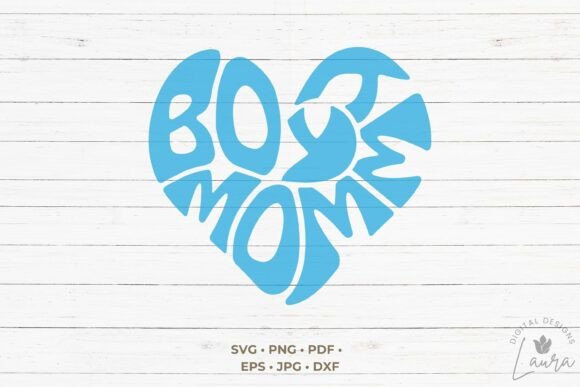
As a professional embroidery digitizer and product reviewer, I approach every new graphic with a specific question: will this actually stitch out beautifully, or is it just a pretty screen image? When evaluating the Boy Mommy Heart Word Art for real-world application, my focus shifts immediately from digital aesthetics to structural integrity. This design, categorized under T-Shirt Designs and Graphics, presents itself as a sentimental SVG cut file perfect for vinyl, but its potential as a machine embroidery design requires a critical eye. The heart shape formed by typography is visually striking, yet translating word art into thread demands careful consideration of stitch density, fabric texture, and overall stability.
First Impressions and Structural Viability
My initial assessment of the Boy Mommy Heart Word Art centers on its silhouette. The interlocking letters creating the heart boundary offer a distinct advantage for embroiderers: defined edges are easier to digitize than amorphous shapes. However, because this originates as an SVG cut file, the lines are likely uniform vector paths rather than variable-width strokes. For a handmade product, uniform lines can sometimes appear stiff if not adjusted during the digitizing process. A successful embroidery file needs organic flow. If you are converting this graphic yourself or purchasing a pre-digitized version, ensure the lettering has been optimized for needle penetration rather than laser cutting.
The mood of this design is undeniably warm and nurturing. It evokes a sense of pride and connection, making it an ideal candidate for personalized gifts or boutique merchandise. Visually, it balances boldness with delicacy. The challenge lies in maintaining that balance when thread meets fabric. In digital mockups, the negative space inside the letters looks crisp; in reality, without proper underlay, those spaces can distort on stretchy knits. As a reviewer, I appreciate designs that acknowledge the physical limitations of thread, and this word art succeeds only if the digitizer respects the relationship between text size and stitch type.
Real-World Application: The Custom Sweatshirt Test
To truly evaluate this asset, I mentally placed it in a current production scenario: creating a premium crewneck sweatshirt for a Mother’s Day capsule collection. Sweatshirt embroidery is a high-stakes application because fleece fabrics are thick, textured, and prone to puckering. The Boy Mommy Heart Word Art fits the center-chest placement perfectly in terms of scale, but the execution requires strategy.
For this custom apparel project, I would avoid using a pure satin stitch for the entire word art. While satin stitches provide a beautiful sheen, they can become too dense when stacked to form a solid heart shape. On fleece, this density creates a "bulletproof" patch effect that ruins the garment's drape. Instead, I recommend interpreting this design as an applique design or utilizing a tatami fill stitch with a running stitch outline. This approach reduces stitch count significantly while maintaining the visual impact. If the design includes intricate interior details within the letters, those must be simplified. Small serifs or tight curves that look fine in a printable mockup will disappear or cause thread breaks on textured fabric. For a craft business or Etsy seller, offering this design on sweatshirts adds significant value, provided the finish is soft and wearable.
Navigating Fabric Challenges and Hoop Limitations
Not every substrate is friendly to typographic art. When planning to use Boy Mommy Heart Word Art on items like baby onesies, tea towels, or tote bags, you must adjust your expectations based on material properties. Baby embroidery requires extreme caution regarding stitch density against sensitive skin. If the word art is too dense, it becomes abrasive. For these delicate projects, consider resizing the design down and using a lighter weight stabilizer, or perhaps stitching only the outline in a running stitch for a minimalist aesthetic.
Conversely, tote bag designs and kitchen towels present a different set of challenges. These items often have coarse weaves that can swallow thin lines. If the Boy Mommy Heart Word Art features slender connecting scripts, they may get lost in the fabric texture. In such cases, increasing the column width or adding a background fill behind the text can improve legibility. Dark fabrics also require testing; light thread on dark cotton can sometimes look grayish if the underlay shows through. Always verify thread colors against the actual fabric swatch before committing to a full production run.
Hoop size is another non-negotiable factor. Word art relies on continuous lines to maintain readability. If your hoop size forces you to split the Boy Mommy Heart Word Art into multiple sections, the alignment risks increase exponentially. Misaligned letters destroy the professional look of a finished product. Before purchasing or digitizing, confirm that the design fits comfortably within your largest available hoop with adequate margin for stabilization. If you are selling digital embroidery files, clearly state the minimum hoop size required to prevent customer frustration.
Commercial Value and Brand Consistency
For creative entrepreneurs and small shop owners, consistency is currency. Using Boy Mommy Heart Word Art across multiple product lines—from embroidered patches to nursery decor—helps build brand recognition. However, the design must be versatile enough to adapt without losing its identity. A version optimized for a cap will differ vastly from one intended for a pillow cover. Caps require taller, narrower spacing to accommodate the curved surface, while pillows allow for wider, more relaxed layouts.
Customer trust hinges on the quality of the final stitch-out. Buyers can instantly distinguish between a cheap, auto-digitized file and a thoughtfully crafted embroidery project. When listing this design on Etsy or your own site, showcase photos of the actual stitched product alongside the digital preview. Highlight how the design interacts with different materials. Does it pucker? Is the lettering legible from a distance? Transparency about the design's performance builds confidence. Furthermore, always verify licensing. Just because a graphic is available as an SVG does not automatically grant commercial embroidery rights. Protect your business by confirming you have the appropriate license to sell finished products or digital assets derived from this artwork.
Essential Designer Notes for Success
Before loading the Boy Mommy Heart Word Art into your machine, adhere to these practical protocols to ensure professional results:
- Test Stitch First: Never run a new design directly onto a sellable item. Use scrap fabric of similar weight and texture to check for registration issues and tension problems.
- Evaluate Stabilizer Pairing: Match your stabilizer to the fabric, not just the design. Stretchy knits need cut-away support; woven cottons may suffice with tear-away. The wrong choice will distort the heart shape.
- Check Contrast and Legibility: View the design in black and white during the editing phase. If the contrast fails in grayscale, it will likely fail in thread. Ensure the font weight is sufficient for the intended viewing distance.
- Inspect Small Details: Zoom in to 400% or higher. Look for overlapping stitches, jump stitches that should be trims, and text that is too small to stitch clearly. Anything under 4mm height in standard fonts is risky.
- Mockup Reality Check: Create printable mockups for marketing, but remember they are sales tools, not technical proofs. Use them to visualize placement and color schemes, but rely on test sew-outs for technical validation.
- Verify File Compatibility: Whether you are buying or selling, ensure the embroidery file format matches the target machines. PES, DST, JEF, and VP3 all handle data differently. Include a read-me file with thread colors and hoop requirements.
The Boy Mommy Heart Word Art holds immense potential for heartfelt, profitable creations. By treating it not just as a graphic but as a blueprint for physical construction, you elevate your work from simple crafting to professional textile art. Respect the medium, test rigorously, and let the bond between mother and son shine through in every stitch of your finished product.